

Standing outside Mumbai’s bustling Vidyavihar Railway Station, one can scarcely imagine a place conducive to quiet chess thought. Right across from it stands the Damji Shamji Trade Centre, its impassive façade blending almost too well into the commercial clutter and din of the neighbourhood. Nothing in the plain brickwork betrays what lies beyond. On its fifth floor, however, one seems to step into a parallel world, the clamour of the feverish streets below receding to a cool hush.
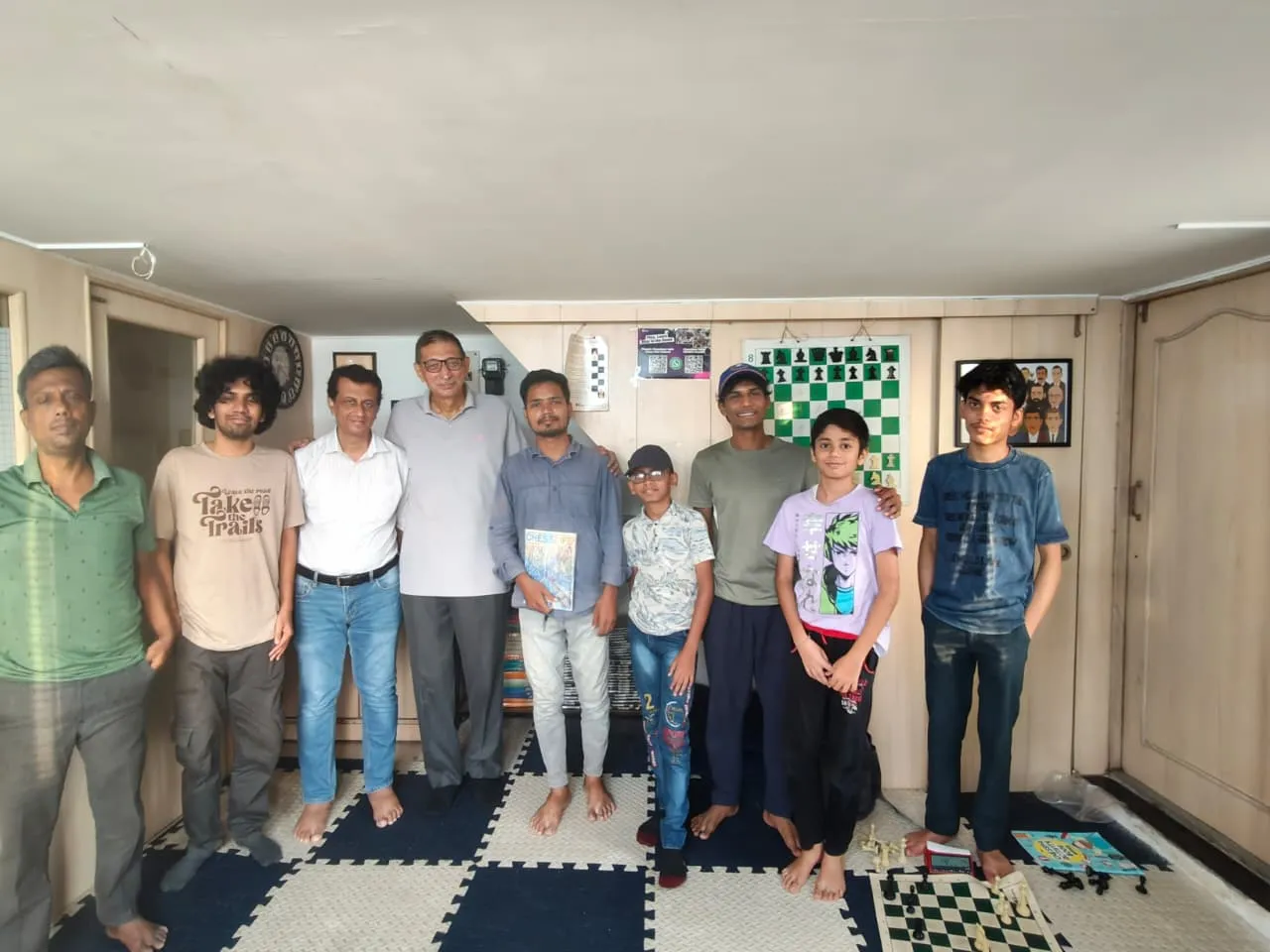
This is the Temple of Chess. Launched by ChessBase India last year and perched just above its offices, it feels like a small island of stillness suspended above the city’s rushing tide. Open every day from 1 pm to 8 pm, it remains absolutely free and runs on a pay-as-you-like model. Passing through its doors, one encounters half a dozen cupboards lined with chess books, more than a thousand of them in all. Further in lies the main hall, where at almost any hour a few visitors may be found — some analysing over a board, others sparring with one another, still others silently leafing through a book.
Somewhere between a library, a study hall, and a meeting ground, the Temple has become, one could say, a rare sanctuary for those enchanted by the sixty-four squares.
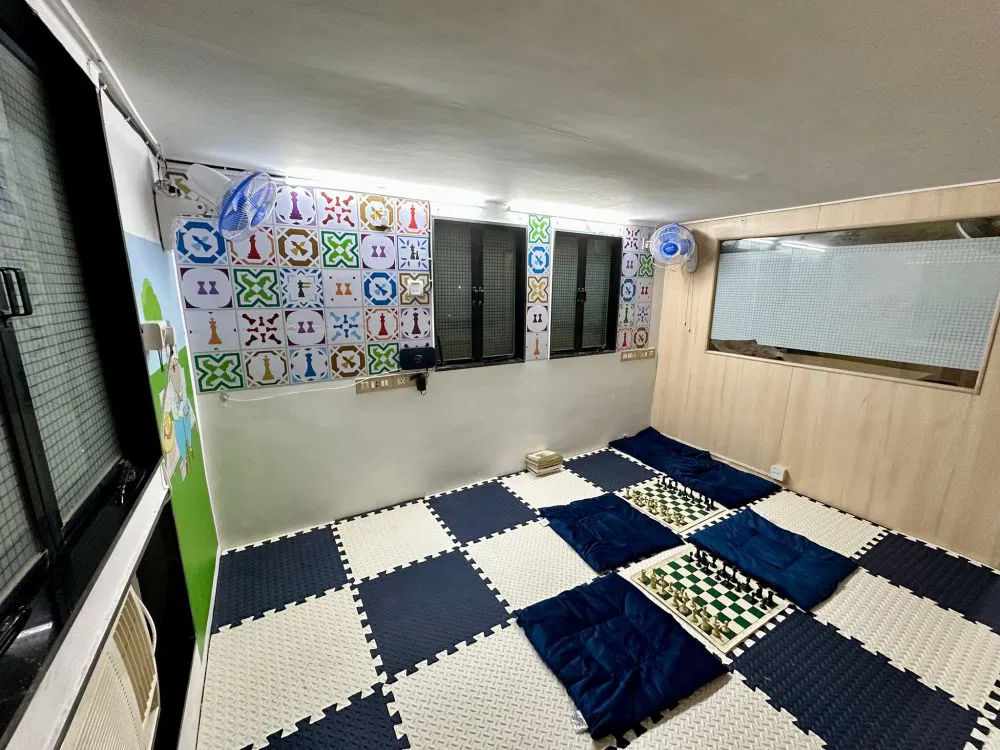
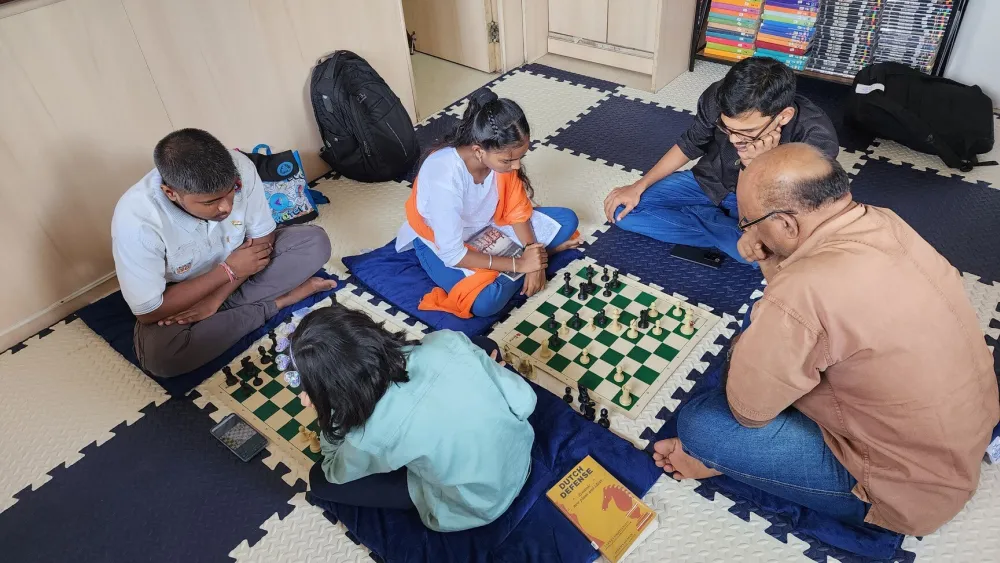
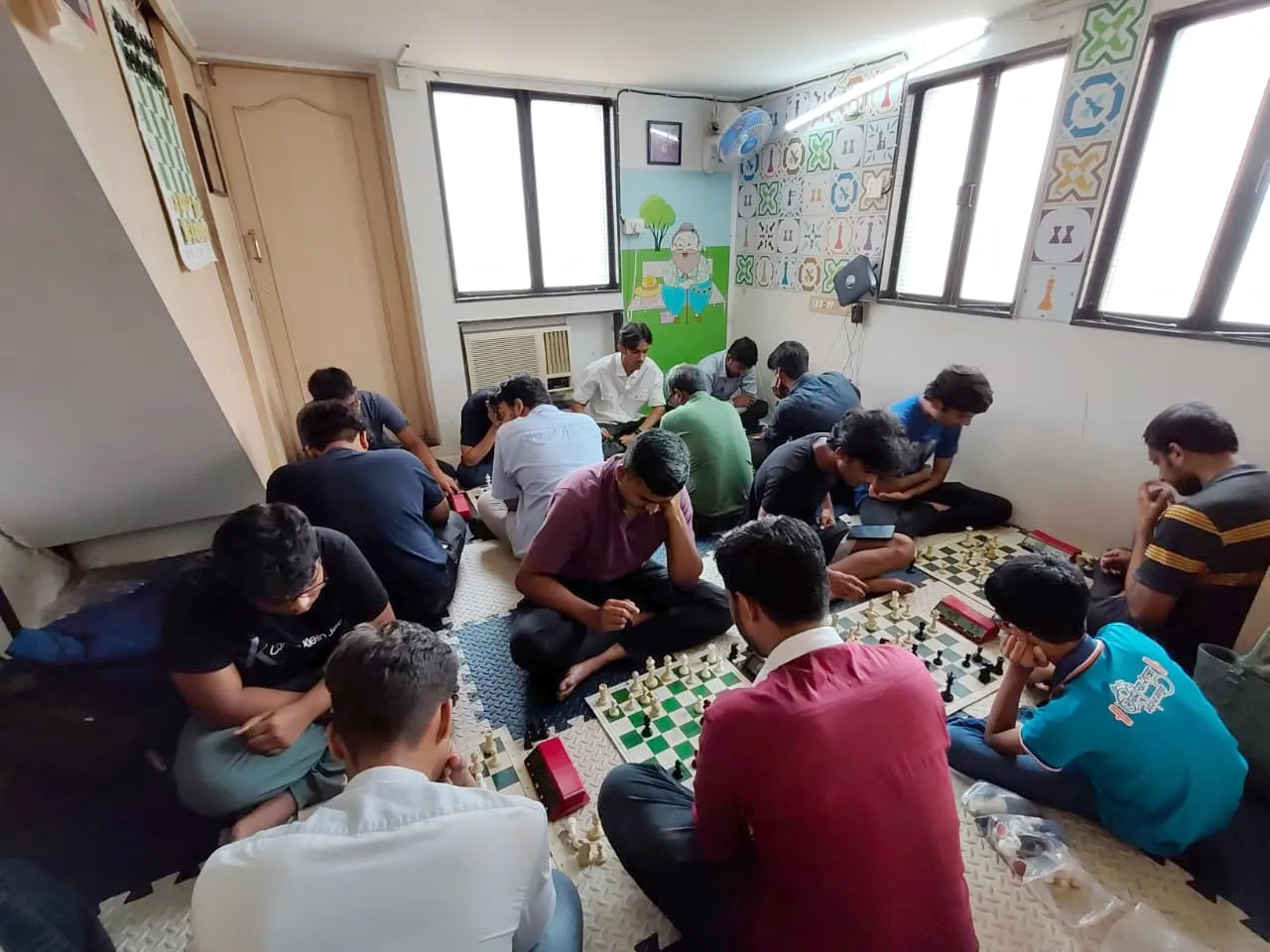
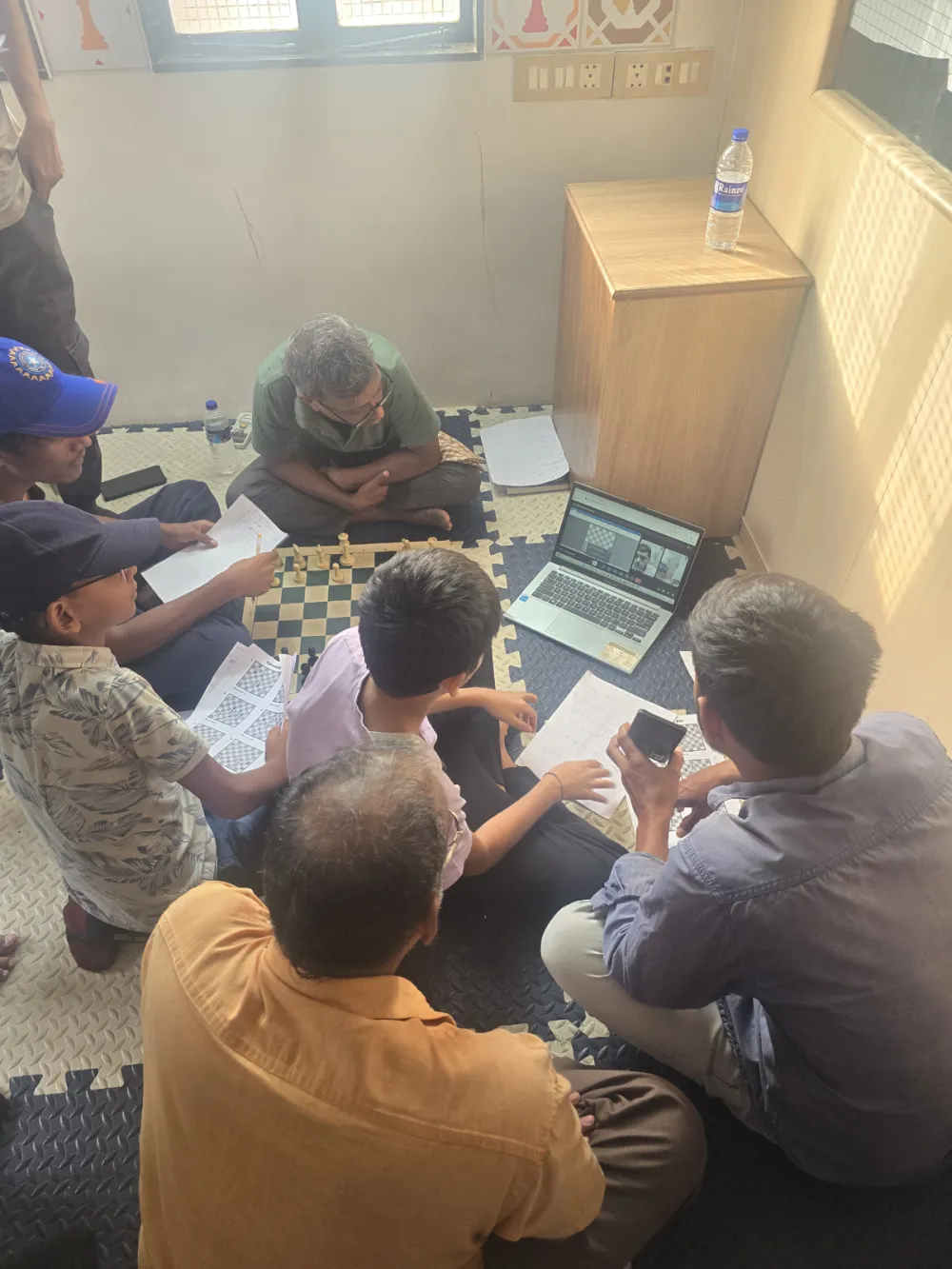
Life at the Temple revolves around all manner of activities: talks by invited guests, reading sessions, and, of course, friendly tournaments. For my part, I have sought to introduce kindred spirits who wander in to the thrill and challenge of solving chess compositions. Since I live in Kolkata, I began organising these gatherings remotely sometime last year with the help of my colleague Aanchal Dhakar. We decided on a simple format: participants would spend two hours attempting to crack six positions, after which I would walk them through the solutions over a video call, discussing the underlying ideas, common mistakes, and questions arising along the way. Last Thursday, 7 May, saw another such rendezvous.
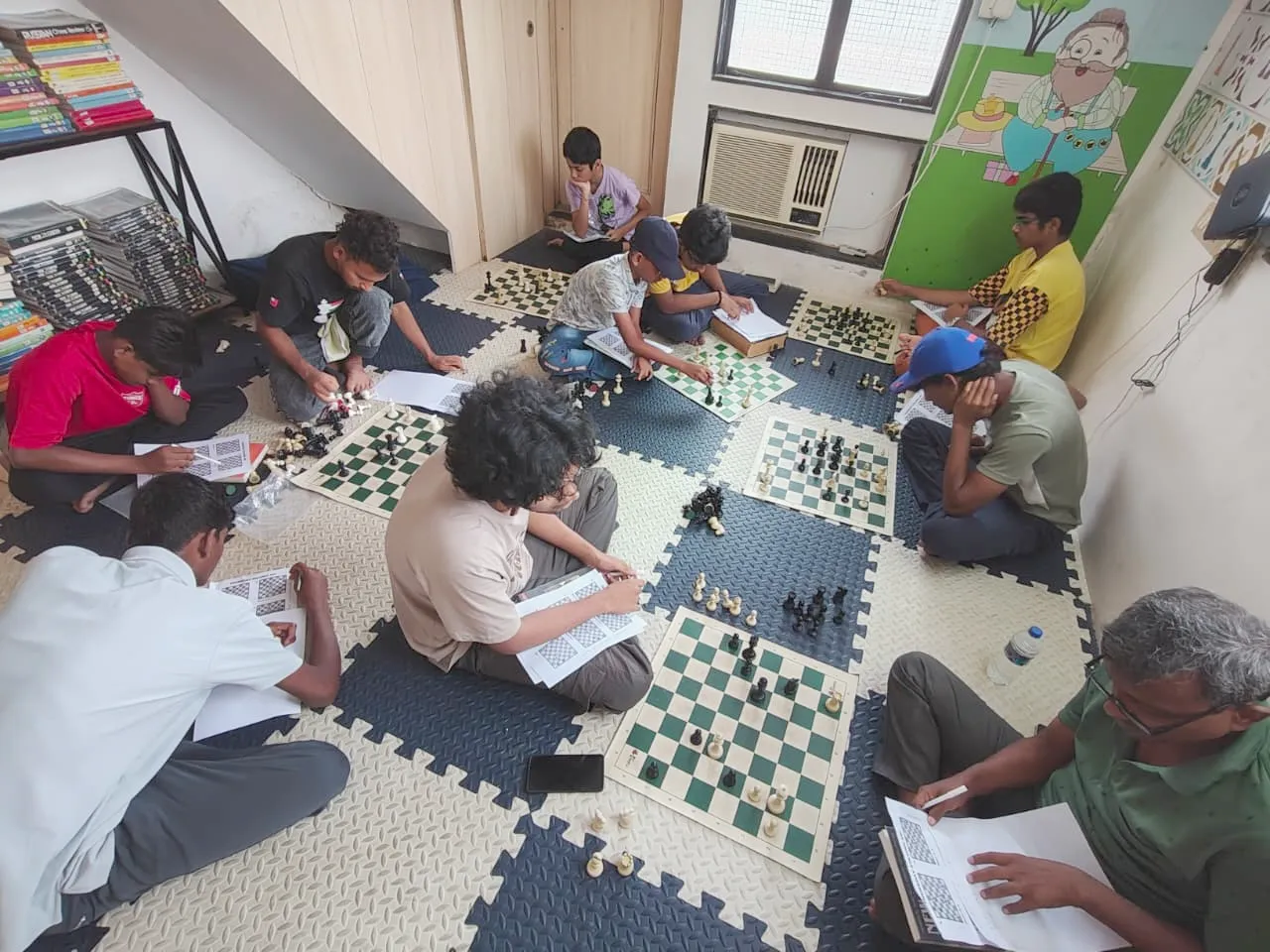
The afternoon’s selection consisted of four directmates and two endgame studies. All six had appeared in recent solving contests and were picked from the WFCC Solving Portal. There was little in the way of curation. I had simply tried to choose positions of varying difficulty — easy for the most part, with one or two on the tougher side. In the next section, we examine them one by one, with the solutions concealed beneath each diagram in expandable blocks for readers keen to avoid glimpsing the answers prematurely.
No.1
Nikolay Nadezhdin
Schach, 1977
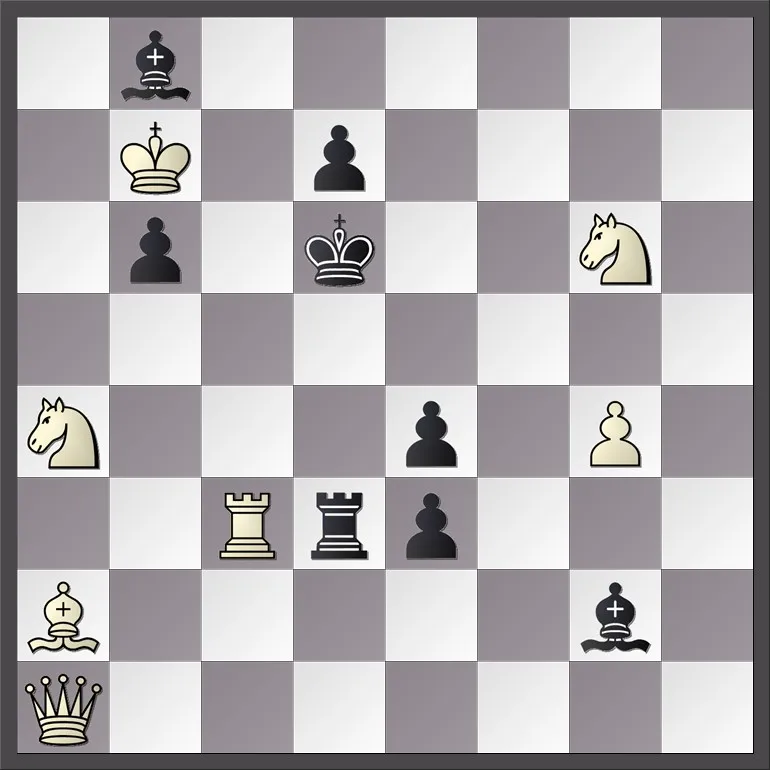
The rook on c3 deprives White of the mating move Qe5. The practical instinct, therefore, is to look for a forcing rook move, opening the queen’s diagonal. Many novices, for instance, would fall for 1.Rxd3+?, intending Qe5# after the compulsory recapture, only to overlook that 1…exd3 comes with check, thanks to the sneaky bBg2. Nor does 1.Rc6+? fare any better, since 1…dxc6 grants the bK an escape square on d7.
Nevertheless, the wR must be moved to threaten 2.Qe5#. But any arbitrary non-checking rook move can be met by the simple 1…Rc3. This suggests the unlikely candidate 1.Rc4! — a move easily dismissed, since it blocks wBa2, conceding the bK two flights — yet, as the variations show, every apparent weakness is deftly accounted for:
1…Ke6 2.Rc6#
1…Kd5 2.Rd4#
1…Rc3 2.Rd4#
1…Rd4 2.Rxd4#
1…Rd5 2.Qf6#
For seasoned solvers, this may well prove a straightforward exercise. They know better than to waste time on checking moves — an extreme rarity in short directmates — and naturally gravitate towards counterintuitive ideas such as the flight-giving key found here.
No.2
Joza Tucakov
Politika, 1998
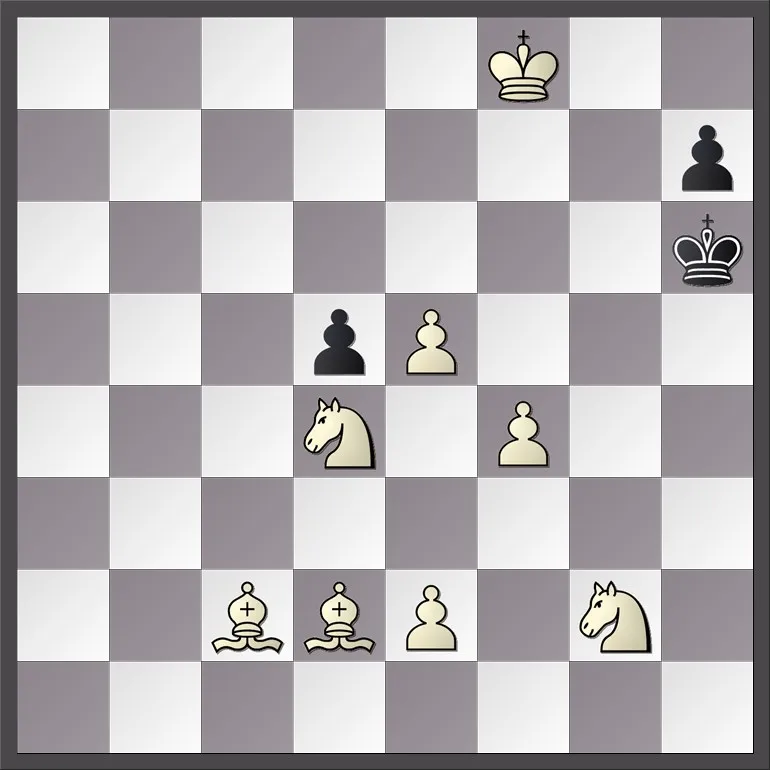
The wBd2 is squarely aimed at the enemy king. Were it not for the wPe2, White would have the straightforward 1.f5+ Kh5 2.Bd1#. With this in mind, 1.e4? appears tempting, clearing the d1–h5 diagonal and setting up 2.f5+ followed by 3.Bd1#. But after 1…dxe4 2.f5+ e3, White mates only a move too late.
The solution is cleverer — it is to begin with 1.Bd1!, a backward move laying an ambush. This threatens 2.f5+ Kh5 3.e4#. The only move that avoids the threat is 1…Kh5, but then comes 2.e4+ Kg6/Kh6 3.f5#.
Uncomplicated but pleasing!
No.3
Chris Ralf Handloser
Schach 2010, 1st Prize
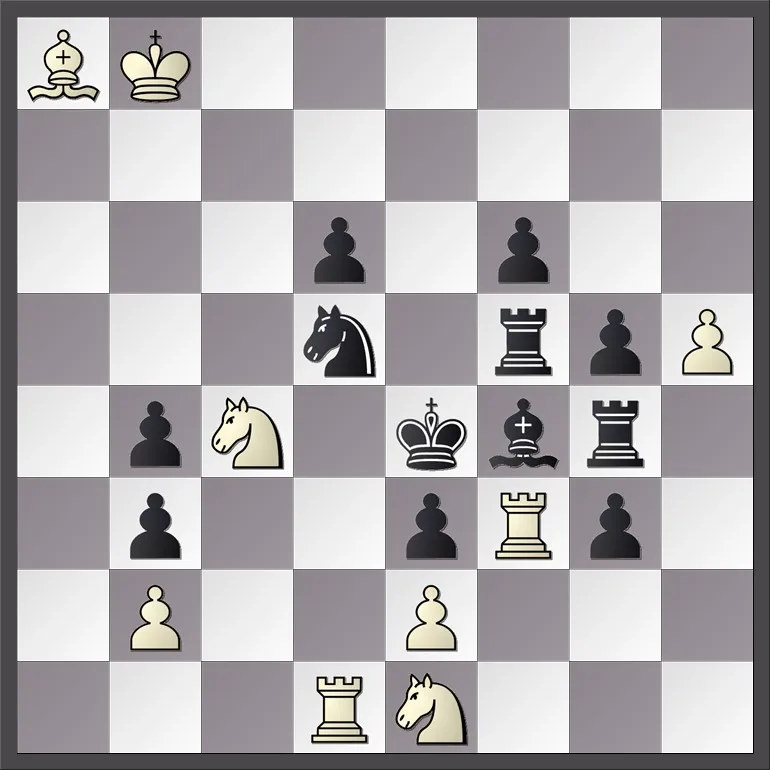
This and the next problem are the only real heavyweights of the lot. With 21 units crowding the board, this three-mover is likely to daunt the novice solver. For someone more experienced, however, there is a clear idea to latch onto.
Bxd5 would be mate if not for bRf5 guarding d5; likewise, Nxd6 would mate but for bBf4’s watch on d6. The only logical plan, therefore, is to engineer a Grimshaw on e5.
The key is 1.Nd3!, threatening 2.Nde5 (Novotny). Should the knight be captured, White obtains one of the mates mentioned above: 1…Bxe5 2.Bxd5#, 1…Rxe5 2.Nxd6#, etc.
Since the wN on d3 affords the bK a flight on d4, 1…Be5 now effectively parries White’s threat. The point is that 2.Ndxe5 can be met by 2…Rxf3, whereupon White no longer has a mate in hand. Instead, there is 2.Nf2+! exf2/gxf2 3.Bxd5#. Note that the apparent dual 2.Nc5+? (intending 3.Bxd5# next) fails, since 2…dxc5 comes with check.
The other thematic defence is 1…Re5, and here the play is neatly reversed. This time 2.Nc5+! dxc5/Kf5 3.N(x)d6# works, the f4-b8 diagonal having been shut off, while 2.Nf2+? fails to 2…Kf5!.
As an afterthought, it is perhaps worth mentioning that 1…Kd4 is not really a defence at all, since White simply continues with the threatened 2.Nde5+, when either 2…Kc5 3.Rxd5# or 2…Ke4 3.Bxd5# follows.
No.4
Oleg Evgenyevich Efrosinin
Odessa Festival 1984, 2nd HM
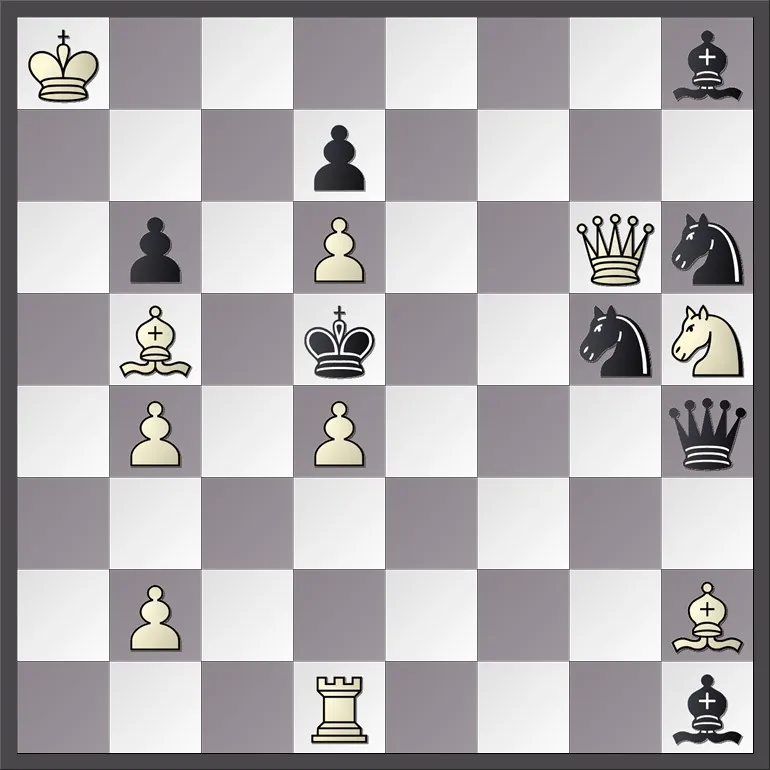
Another challenging problem for the neophyte solver; the seasoned eye, however, will quickly sense the latent potential of Nf4 and Nf6, though neither idea can yet be carried out, as f4 and f6 are guarded by bQh4 and bBh8 respectively.
The solution begins with the subtle 1.b3!, threatening 2.Bc4+ Kc6 3.b5#. Black can stop this only by eliminating the d4-pawn with either Bxd4 or Qxd4. In the process, however, control of f4 or f6 is relinquished, leading to the following variations:
1…Qxd4 2.Nf4+! Ke5+ 3.Ng2+! Kd5 (3…Qf4 4.Bxf4#) 4.Ne3#
1…Bxd4 2.Nf6+! Ke6+ 3.Ne4+! Kd5 (3…Bf6 4.Qxf6, Bc4#) 4.Nc3#
Especially attractive is the way each line culminates in a third-move cross-check followed by a pin-mate.
No.5
Alexey Troitzky
500 Endspielstudien, 1924
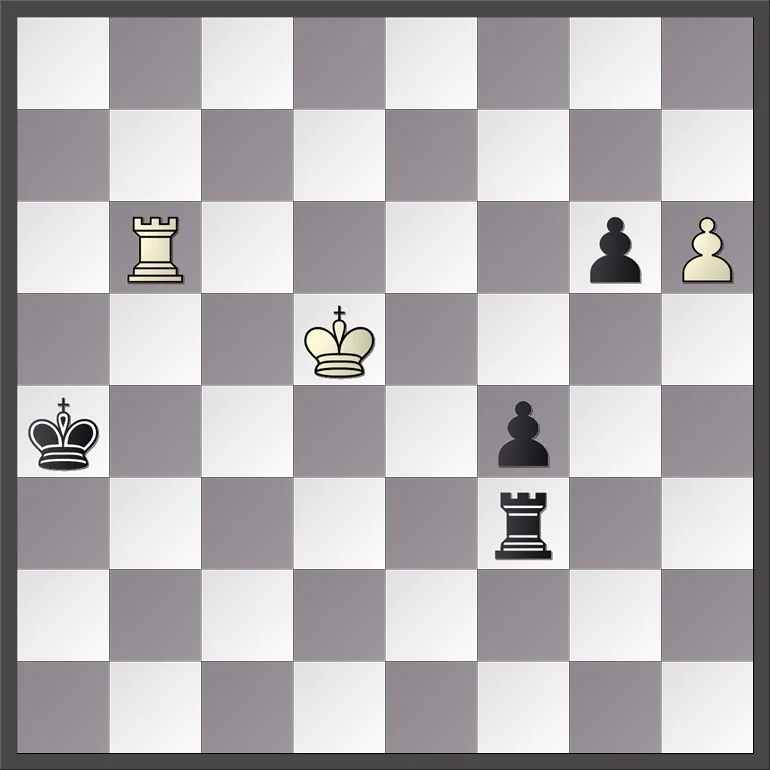
Clearly, the h-pawn is White’s trump in the position. However, the immediate 1.h7? is met by 1…Rh3 and achieves nothing. The bK, hemmed in on the edge of the board, invites a different approach.
1.Kc4!, threatening mate with Ra6, 1…Ka5 (1…Ka3 2.h7 Rh3 3.Rb3+! Rxb3 4.h8=Q +-) 2.Rb5+ Ka6 3.Rh5! — the point of the study — 3…gxh5 4.h7, and the h-pawn cannot be stopped from queening.
Elementary, perhaps, but cleanly done.
No.6
Aleksandr Petrovich Kuznetsov
EG, 1975
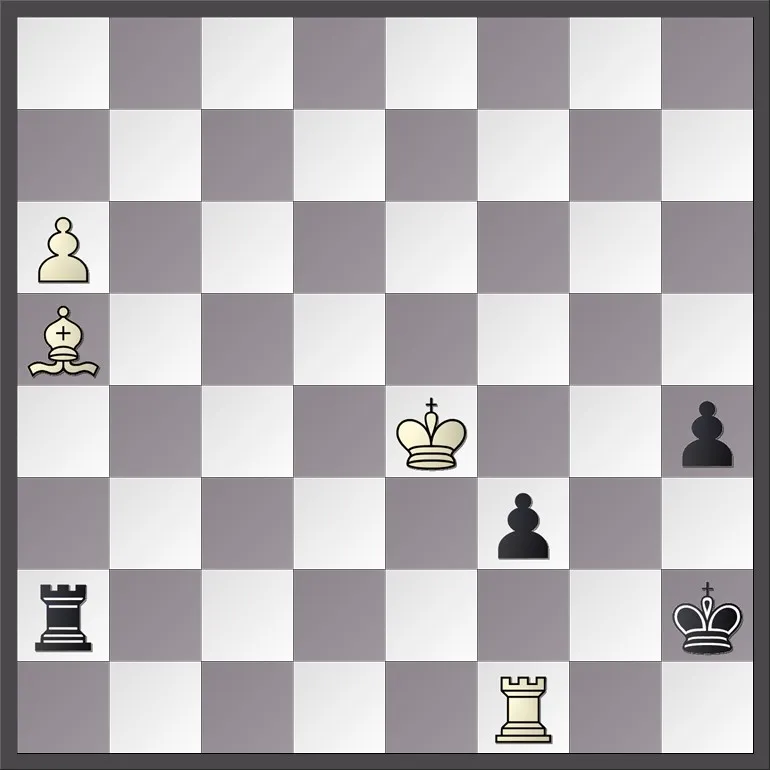
As in No.5, the goal here too is to shepherd the passer to promotion. Needless to say, 1.a7? Rxa5 yields nothing. The trick, instead, is to begin with a deflection.
1.Rf2+! Rxf2 2.a7 Re2+ 3.Kxf3 Re8. White now appears ready to win with Bc7+ followed by Bb8, but there remains one final cheapo to watch out for: 4.Bc7+ Kh3!? 5.Bb8 Rxb8 6.axb8=R! — yes, 6.axb8=Q? would be a disastrous stalemate.
To be sure, a light study, but that stalemate avoidance is easy to miss.
Wrapping Up: As the Afternoon Draws to a Close

***